What is brain injury?
An acquired brain injury (ABI) is an injury you were not born with. This includes both traumatic and non-traumatic brain injuries.
What causes brain injury?
A brain injury, or head injury, is caused by an injury to the head or face.
A traumatic brain injury (TBI) is caused by an assault, fall or accident. A non-traumatic brain injury (NTBI) may be caused by events such as a stroke, tumour or a lack of oxygen to the brain.
What are the symptoms of brain injury?
The effects and severity of a brain injury vary. This means that each person may experience different challenges and difficulties, depending on the part of the brain affected. Therefore, the long-term symptoms of brain injury also vary, but can include:
- Dizziness
- Headaches
- Problems with the senses
- Memory issues
- Difficulties concentrating
- Emotional and behavioural changes
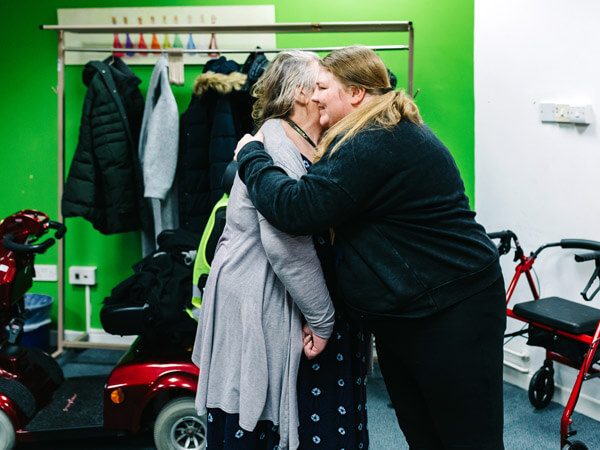
If you’re affected by brain injury, The Brain Charity can support you.
We are the only charity in the UK to be here for every one of the more than 600 different neurological conditions in existence. Individually, many are rare, but combined, they affect 1 in 6 people.
We provide practical help on all aspects of living with a brain injury, emotional support such as counselling, phone befriending and group therapy and social activities to people with brain injuries from all over the UK from our centre in Liverpool.

Looking to talk to someone?
Contact The Brain Charity now
Our friendly Information and Advice Officers are here to help.
We support carers, friends and family too
Are you a carer for or relative of someone with a brain injury? It’s just as important for you to look after your own physical and mental wellbeing too.
The Brain Charity provides free support for carers, friends and family of people with any form of neurological condition, including brain injury, from anywhere in the UK.
We also run an additional carers advocacy service for all carers in Liverpool, regardless of which type of condition the person they care for has.
You don’t need to be a formal or registered carer
We can help you even if you don’t view yourself as a formal carer or claim Carer’s Allowance. Find out some of the ways we support carers below.

Resources Library
Support groups
Headway
Find support in your area. HeathUnlocked and Headway also have an online forum.
Child Brain Injury Trust
Support groups at The Brain Charity
Are you interested in setting up a brain injury support group, or do you already run one? Email [email protected] to let us know.
Alternatively, you can check out our list of related support groups here.
Other charities
Headway (charity working to improve life after brain injury)
Helpline: 0808 800 2244
Website: www.headway.org.uk
Brain and Spine Foundation
Helpline: 0808 808 1000
Website: www.brainandspine.org.uk
Brake (road safety charity)
Helpline for road crash victims: 0808 800 0401
Website: www.brake.org.uk
UK Acquired Brain Injury Forum (charity promoting a better understanding of acquired brain injuries)
Helpline: 0845 608 0788
Website: ukabif.org.uk
Brain Injury Rehabilitation and Development (charity offering treatment to people with brain injuries and learning difficulties)
Helpline: 0800 028 6256
Website: www.birdcharity.org.uk
Child Brain Injury Trust (for families and professionals affected by childhood acquired brain injury)
Website: childbraininjurytrust.org.uk
SameYou (charity for young adults with brain injury and stroke)
Website: www.sameyou.org