
Ofsted, autism and extremism
What does the evidence actually say?
When Ofsted introduced training for inspectors on the government’s Prevent duty, it included guidance stating that children with autism were “at increased risk of being susceptible to extremism”.
The training suggested that autistic children were more likely to develop intense special interests, experience social isolation, seek friendships online, and trust information they encountered on the internet, factors that, it argued, could make them more vulnerable to extremist grooming.
The guidance prompted strong criticism from autistic people, researchers, charities and campaigners, who argued that it unfairly associated autism with extremism and risked reinforcing harmful stereotypes. Following that criticism, Ofsted removed references to autism from its updated inspector training.
For some, this was a necessary correction to discriminatory guidance. For others, it raised a different question: had an important safeguarding discussion been lost?
Beneath the headlines lies a more complicated debate.
Was the original guidance fundamentally wrong? Or was it expressing a legitimate safeguarding concern in a way that was too broad? More importantly, what does the research actually tell us?
Rather than taking sides, it’s worth examining the different strands of this debate.
What changed?

The original inspector training stated that children with autism were “at increased risk of being susceptible to extremism” because they were more likely to develop special interests, experience social isolation and seek friendships online, making them vulnerable to extremist grooming.
Following criticism from campaigners and autism organisations, Ofsted removed references to autism from its updated Prevent training.
Susceptibility is not the same as extremism
One of the biggest problems with the public debate is that two very different ideas have become blurred together.
There is a substantial difference between saying:
- Autistic people are more likely to become extremists, and
- Some autistic people may be more vulnerable to manipulation by extremists.
These are not equivalent statements.
Modern research provides little evidence that autistic people are disproportionately represented among extremists. However, there is considerably stronger evidence that some autistic individuals experience characteristics that can increase vulnerability to many forms of exploitation.
The distinction matters because safeguarding is primarily concerned with vulnerability, not criminality.
Where did Ofsted get this idea?
The wording did not emerge from nowhere.
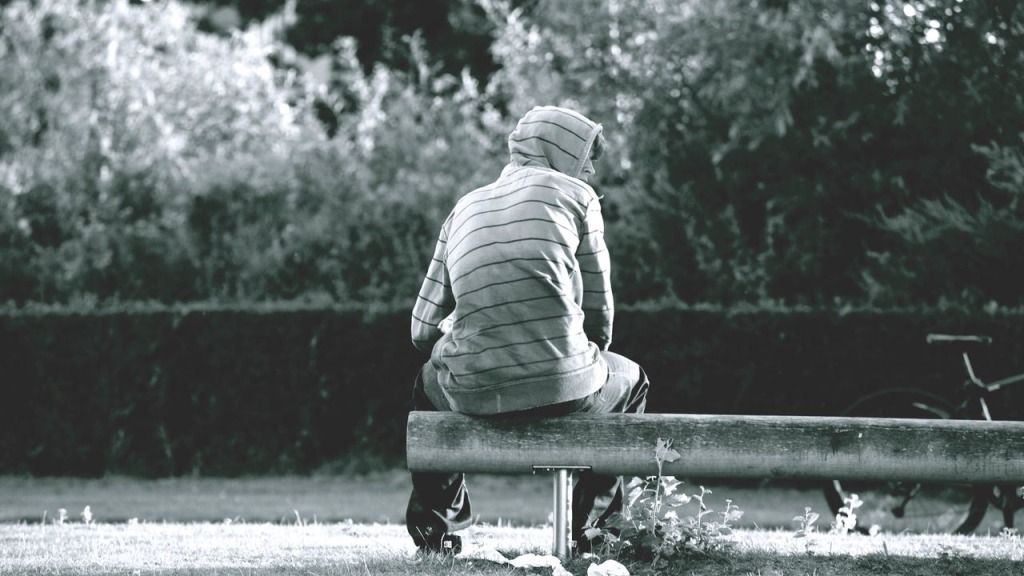
Researchers have consistently found that many autistic people experience higher rates of:
- Social isolation
- Bullying
- Loneliness
- Online engagement
- Difficulties recognising deception
- Victimisation
These factors are recognised across safeguarding literature as increasing vulnerability to exploitation. More broadly, Prevent guidance has long focused on identifying people who may be vulnerable to manipulation, recruitment or coercion rather than attempting to identify a “terrorist profile.”
The difficulty is that these vulnerability factors are neither universal among autistic people nor unique to autism.
The research is more nuanced than either side suggests
The strongest evidence does not support the claim that autism itself is a risk factor for extremism.
Instead, researchers generally conclude that certain characteristics, which some autistic people experience, may increase vulnerability to recruitment under particular circumstances.
These include:
- Chronic social isolation
- Identity struggles
- Intense or highly focused interests
- Loneliness
- Difficulties interpreting social situations
- Extensive online engagement
Importantly, these characteristics are neither present in every autistic person nor exclusive to autism.
Almost all autistic people will never encounter extremist groups, let alone become involved with them.
The real safeguarding question

The controversy may have asked the wrong question.
Instead of asking whether autistic children are more vulnerable, we might ask: Which children are genuinely vulnerable to manipulation?
That group includes many children who are:
- Isolated
- Bullied
- Excluded
- Emotionally neglected
- Spending large amounts of time online
- Struggling to find belonging
Some autistic children fall into that category.
Many do not.
Equally, many non-autistic children also experience these vulnerabilities.
Safeguarding should begin with individual circumstances rather than diagnostic labels.
Could removing autism from the guidance have consequences?
Campaigners argued that naming autism risked reinforcing harmful stereotypes.
That concern deserves to be taken seriously.
Yet another question has received much less attention.
If guidance no longer discusses vulnerabilities that may affect some autistic young people, could inspectors become less aware of those children’s safeguarding needs?
Removing stigma is important.
Removing awareness is not necessarily the same thing.
The challenge is finding language that acknowledges genuine vulnerabilities without implying that autism itself creates dangerousness.
Towards better guidance
Perhaps the original guidance failed not because it recognised vulnerability, but because it attached that vulnerability too directly to a diagnosis.
A more balanced approach might say:
Some children experience social isolation, communication differences, loneliness or difficulties evaluating online information. Where these vulnerabilities are present, including in some autistic children, they may increase susceptibility to manipulation. Assessment should always be based on individual circumstances rather than diagnosis alone.
That approach neither ignores autism nor stereotypes autistic people. Instead, it focuses on the vulnerabilities that safeguarding professionals are actually trying to identify.
Final thoughts
This controversy reminds us that safeguarding is rarely straightforward.
Professionals need language that is both evidence-based and precise. Campaigners are right to challenge wording that risks reinforcing stereotypes. Equally, safeguarding guidance should not become so cautious as to ignore genuine vulnerabilities.
The lesson is not that autism and vulnerability should never be discussed together.
It is that diagnoses should never become shorthand for risk.
Good safeguarding starts with people, not labels. Good science recognises averages without losing sight of individuals. And good public policy should be able to hold both ideas at the same time.
 Share
Share
 Tweet
Tweet
Related information

Published: 18 March 2026