

Things to consider when talking about autism
Outdated terms and common misconceptions
The language we use to talk about autism matters. Words can challenge stigma and build understanding, but outdated terms and common misconceptions can reinforce stereotypes and make autistic people feel misunderstood or excluded.
The conversation is important, and no one should feel worried about saying the wrong thing. Always be open; ask questions and understand that the language around autism is constantly evolving, so it’s ok to get it wrong sometimes.
Whether you are talking to an autistic person, supporting a friend or family member, or learning more about neurodiversity, understanding what the right words are when talking about autism is an important step towards creating a more inclusive society.
Workplace neurodiversity training from The Brain Charity
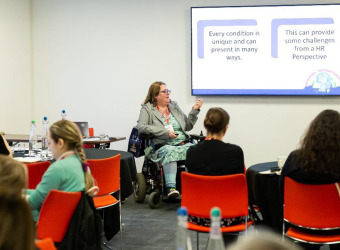
The language we use matters. Misconceptions and outdated terminology can reinforce stigma and leave autistic people feeling misunderstood or excluded.The Brain Charity’s workplace neurodiversity training helps organisations challenge stereotypes, communicate inclusively, understand individual needs and make practical workplace adjustments.
Available online or in person, our tailored training helps create more understanding and inclusive workplaces where neurodivergent people can thrive.
Want to make your workplace more neurodiversity-friendly?
Here are some common terms and misconceptions to avoid, and what you can say instead.
1. Avoid saying someone “suffers from autism”
Autism is a lifelong neurodevelopmental condition, reflecting natural variation in how the brain develops and processes information. While some autistic people experience significant challenges, describing everyone as “suffering from autism” assumes that autism is inherently negative.
Difficulties may arise from sensory environments, inaccessible systems or a lack of understanding and support.
What to do instead: Use the term “autistic person” or “person with autism”, depending on the individual’s preference.
Many people prefer identity-first language, such as “autistic person”, while others prefer person-first language. Respect individual preferences wherever possible.
2. Don’t describe someone as “high-functioning” or “low-functioning”
These labels oversimplify the experiences of autistic people. Someone described as “high-functioning” may still need substantial support with daily activities, communication or sensory overload. Someone labelled “low-functioning” may have strengths and abilities that others overlook.
What to do instead: Describe the person’s individual strengths, access needs and support requirements.
3. On the term Asperger’s syndrome
Asperger’s syndrome is an outdated diagnostic term that is no longer used as a separate diagnosis in current diagnostic manuals. In 2013, it was incorporated into the broader diagnosis of autism spectrum disorder in the DSM-5. The World Health Organisation’s ICD-11 also includes Asperger’s syndrome within autism spectrum disorder rather than as a separate diagnosis.
Some people in the UK still have an existing Asperger’s diagnosis or identify strongly with the term.
Using Asperger’s to distinguish certain autistic people from others can reinforce the misconception that there are separate types of autism or that some autistic people are more capable or valuable than others.
The term is also associated with Hans Asperger, an Austrian doctor whose historical involvement with the Nazi regime and the persecution of disabled people has prompted further discussion about the name.
What to do instead: Generally, use “autistic person” or “person with autism”, depending on individual preference. If someone identifies as having Asperger’s syndrome, respect their preferred terminology.
4. Avoid calling autism a “superpower”
Although often intended as a compliment, calling autism a superpower can create unrealistic expectations. Not every autistic person has an exceptional talent, and the phrase can minimise genuine barriers and support needs.
What to do instead: Recognise individual strengths and experiences without suggesting someone must have extraordinary abilities to be valued.
5. Don’t say someone “doesn’t look autistic”
Autism does not have one particular appearance. Some autistic people mask their traits to fit in or avoid negative reactions, while others may communicate or behave in ways that challenge common stereotypes.
What to do instead: Listen to what someone tells you about their experiences rather than making assumptions based on appearance or behaviour.
6. Avoid assuming autistic people lack empathy
A common misconception is that autistic people do not care about others or cannot understand emotions. In reality, autistic people experience and express empathy in different ways.
Some may find it difficult to interpret facial expressions, body language or unspoken social expectations. This does not mean they lack care or concern.
What to do instead: Ask how someone prefers to communicate and avoid judging their feelings by how they express them.
7. Don’t describe autism as a behaviour problem that needs fixing
Autistic people may communicate, move, process information or respond to sensory experiences differently. These differences should not automatically be treated as bad behaviour.
Repetitive movements, sometimes called stimming, may help an autistic person regulate their emotions or manage sensory input.
What to do instead: Talk about access needs, reasonable adjustments and supportive environments rather than trying to make someone appear “less autistic.”
8. Don’t think autism can or should be cured
Autism cannot be cured because it is a lifelong neurodevelopmental condition, reflecting natural variation in brain development. It is not an illness that needs to be eliminated for someone to live a meaningful, fulfilling life.
Some autistic people benefit from support with particular challenges, and appropriate support can make a real difference. The aim should be to improve wellbeing, reduce barriers and support individual needs without trying to remove someone’s autistic identity.
What to do instead: Focus on understanding autism, providing appropriate support and creating inclusive environments that respect individual needs and choices.
CPD-certified Neurodiversity Awareness in the Workplace E-Learning
Understanding autism means challenging misconceptions, recognising individual differences and creating more inclusive environments.The Brain Charity’s CPD-certified e-learning course uses real-life experiences and practical advice to help you become a better ally and support neurodivergent people.
Complete the 60–90-minute course for £28 and receive a CPD-accredited certificate.
Learn more and make a difference today!
How to talk about autism respectfully
You do not need to know every preferred term to communicate respectfully. A willingness to listen, learn, and correct mistakes is a good place to start.
- Ask rather than assume. People have different preferences for how they describe themselves.
- Avoid generalisations. No single experience represents every autistic person.
- Focus on the person, not stereotypes. Recognise individual strengths, challenges and support needs.
- Challenge misconceptions. Share accurate information when you encounter harmful assumptions.
- Be open to learning. Language evolves, and listening to autistic people can help you understand why certain terms may be unhelpful.
Creating a more autism-inclusive society
The words we use can influence how autistic people are treated at home, at school, at work and in the wider community. Moving away from outdated language is not about being perfect. It is about showing respect, challenging stigma and recognising that autistic people deserve to be understood on their own terms.
At The Brain Charity, we believe that greater understanding of neurodiversity can help create a more inclusive society where people are supported to live the lives they choose.
By listening to autistic people, questioning stereotypes and choosing our words thoughtfully, we can all play a part in making that happen.
 Share
 Tweet