Why neurodivergent conditions are often overlooked in physically disabled people
The hidden impact of diagnostic overshadowing
Awareness of neurodivergence has grown significantly over the past decade. More people are being identified with autism, ADHD, dyslexia and dyspraxia than ever before, helping them access support, adjustments and a better understanding of themselves.
Yet for many physically disabled people, neurodivergent conditions remain unrecognised.
One reason may be diagnostic overshadowing, in which an existing diagnosis influences how professionals interpret a person’s difficulties, making additional conditions harder to identify.
While physical disability and neurodivergence are often discussed separately, people can experience both. This raises an important question: How often is neurodivergence being considered during the diagnostic process?
What is diagnostic overshadowing?
Diagnostic overshadowing occurs when an existing diagnosis influences how professionals interpret a person’s symptoms, behaviours or difficulties. Rather than investigating whether multiple conditions may be present, there may be a tendency to attribute everything to the already-known diagnosis.
A systematic review found that diagnostic overshadowing can prevent healthcare professionals from recognising the “complete diagnostic picture”, leading to important needs and conditions being overlooked.
While much of the research has focused on mental health conditions and learning disabilities, the principle applies more broadly. When a person has a visible physical disability, additional difficulties may be interpreted exclusively through that lens.
The result is that neurodivergence may not always be considered in assessment or care, even when it could help explain a person’s experiences.
What the evidence shows in physically disabled populations
Many physical disabilities and neurodevelopmental conditions also overlap in their presentation. For example, difficulties with coordination or motor planning may be attributed to a physical disability like cerebral palsy, even when co-occurring conditions such as dyspraxia are also present.
While this area is still developing, there is clear evidence that neurodivergent conditions are under-recognised in some physically disabled populations, particularly those with neurological conditions such as cerebral palsy.
In a population-based study of 200 school-age children with cerebral palsy, it was found that around 45% had autism, ADHD or both, and many had not received earlier diagnoses. The authors recommended routine screening for these conditions in cerebral palsy services.
Similar findings have been reported in neurological disability populations, where ADHD is often identified only after specialist assessment, suggesting under-recognition rather than absence of symptoms.
These findings indicate that neurodevelopmental conditions may be more common in physically disabled populations than previously assumed, but also that they are not always identified early or consistently in clinical practice.
Diagnosis through behavioural observation
Another challenge lies within the assessment process itself.
Many neurodevelopmental conditions are identified through behavioural observation, but these observations are often based on assumptions about how people interact with the world physically and sensorily.
For example, difficulties with eye contact are commonly associated with autism. However, this assumption becomes more complex when assessing someone who has been blind since birth.
Research examining autism and visual impairment has highlighted that some behaviours associated with visual impairment can resemble autistic traits, while some autistic characteristics may present differently.
Assessment tools have often been developed using sighted populations, creating challenges when applied more broadly.
This does not mean autistic traits are absent in visually impaired individuals. Rather, it highlights that diagnostic frameworks may not always account for different sensory experiences.
The risk of focusing on what is visible

Physical disabilities are often easier to recognise than neurodivergent traits. A mobility aid or visible impairment can provide an immediate explanation for many of the challenges a person experiences.
By contrast, neurodivergent traits such as differences in attention, sensory processing, or communication may require more detailed assessment to be identified.
As a result, a person may receive support for their physical disability while co-occurring neurodivergent needs remain unidentified. In some cases, these differences may be interpreted as personality traits or behavioural issues rather than signs of an underlying neurodevelopmental condition.
The consequence is not only a missed diagnosis, but a missed opportunity to understand a person’s full support needs.
Why recognition matters
A diagnosis is not just a label.
For many people, understanding that they are neurodivergent provides a framework for making sense of experiences that may have felt confusing or isolating for years.
It can help people access appropriate support, request reasonable adjustments, develop coping strategies and connect with others with similar experiences.
Without that understanding, people may spend years believing their difficulties are personal failings rather than unmet support needs.
For physically disabled people, this can mean navigating multiple barriers, while only some are formally recognised. The impact can extend across education, employment, healthcare and mental wellbeing.
A need for more inclusive assessment

If neurodivergence is to be recognised more consistently among physically disabled people, assessment systems may need to evolve.
Healthcare professionals require training that recognises the possibility of co-occurring conditions, and assessment tools need to account for sensory and physical differences. Researchers also need to continue exploring how neurodivergent traits present across different disabled populations.
Importantly, diagnostic overshadowing has been described as a persistent contributor to healthcare inequality, where existing diagnoses influence how new symptoms are interpreted and investigated.
This makes it essential that professionals remain open to the possibility that a single diagnosis may not explain everything.
Seeing the whole person
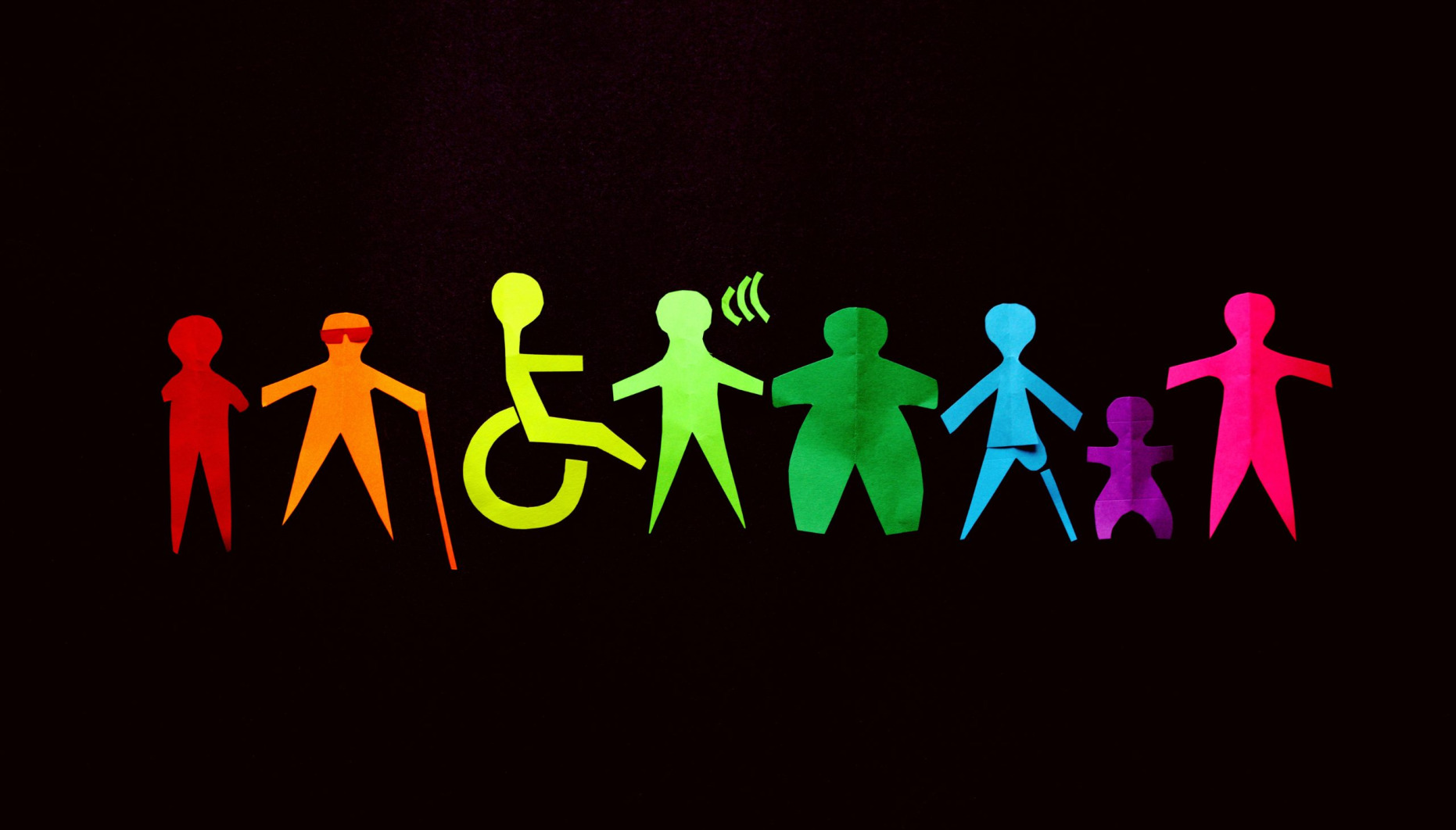
Physical disability and neurodivergence are often treated as separate categories, but in reality, many people live at the intersection of both.
The evidence from neurological disability populations suggests that co-occurring neurodevelopmental conditions are relatively common, even when they are not initially identified.
The challenge is not simply improving diagnostic rates. It is ensuring that healthcare, education and support systems see the whole person rather than only the most visible aspect of their experience.
Because when disability becomes the only lens through which someone is viewed, important aspects of who they are can remain hidden in plain sight.
Categories: Neurodiversity, News
Published: 17 June 2026
 Share
Share
 Tweet
Tweet