

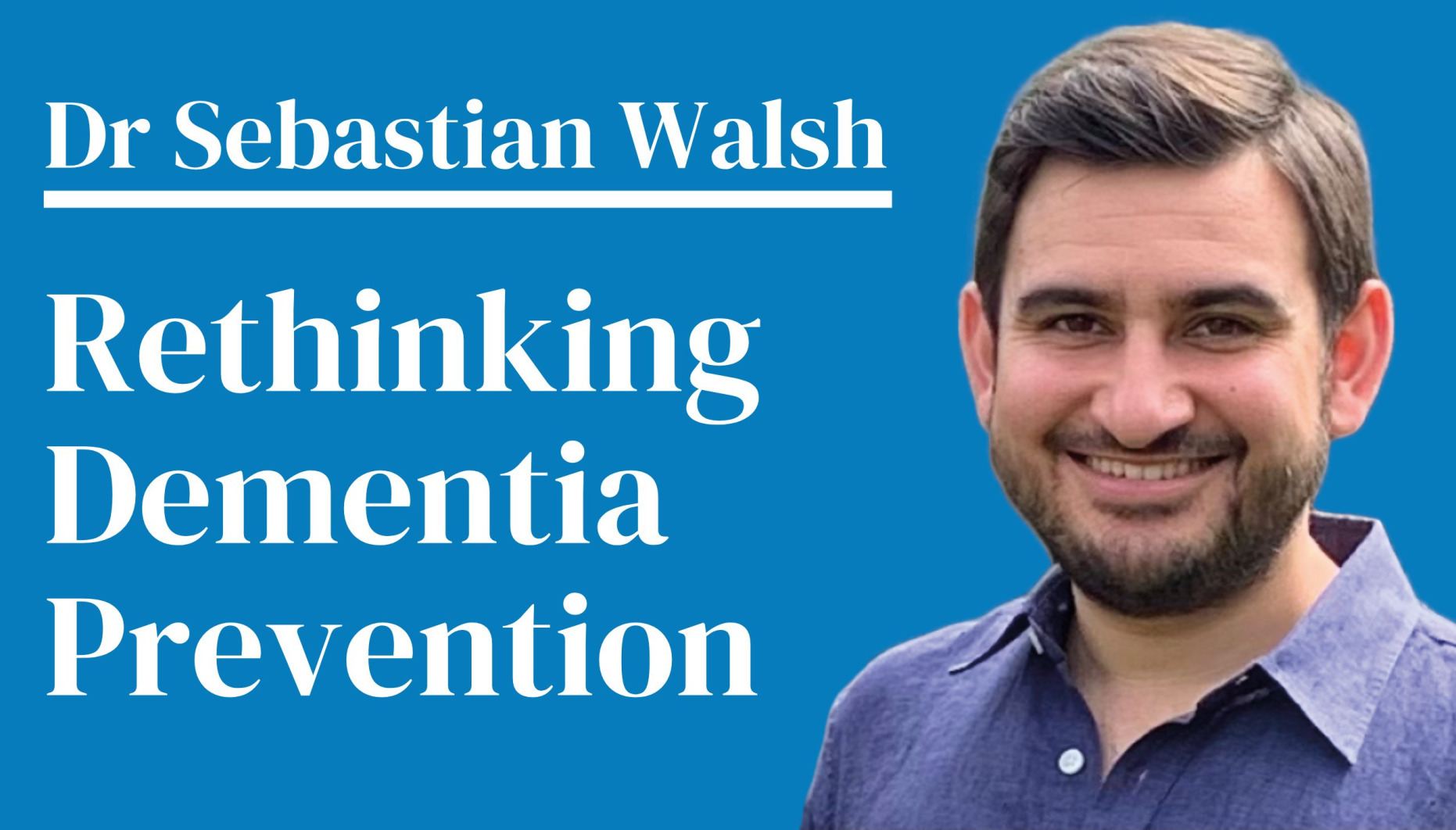
Rethinking dementia prevention: why society matters as much as biology
By Dr Seb Walsh
Dementia is one of the defining health challenges of our time. As populations age, more people are living with conditions like Alzheimer’s disease (one of the leading causes of dementia). Dementia causes significant distress for people living with it and for their loved ones, and it places increasing strain on health and social care systems. Despite decades of research, effective treatments for dementia remain limited. But what if the most powerful tool we have isn’t a drug at all—what if it’s the way we shape our environments?
This is the central idea behind my PhD thesis, A Population-Level Approach to Dementia Risk Reduction, completed at the University of Cambridge. Rather than focusing only on individuals, I argue that preventing dementia requires us to rethink the bigger picture: the social, economic, and environmental conditions that shape our lives.
Moving beyond “individual responsibility”
Most public health advice about dementia focuses on individual choices—eat well, exercise regularly, don’t smoke, control blood pressure, wear a hearing aid if you need one, protect your mental health, and stay mentally active. These are all important, and research suggests they can reduce risk. But my research highlights a key limitation: not everyone has the same ability to make these choices.
For example, access to healthy food, safe places to exercise, having higher levels of education, living somewhere with low levels of air pollution, and access to healthcare all varies widely depending on where people live and their wealth.
When prevention strategies rely heavily on individuals changing their behaviour, they risk widening the gap that we already see with poorer people more likely to develop dementia. These prevention approaches aimed at changing individuals’ behaviour are called “high-agency” approaches—ones that assume people have the time, resources, and freedom to act on advice. While useful, they can’t fully address the root causes of dementia risk, which are often embedded in society itself.
The Case for a population-level approach, so what’s the alternative?
In my PhD, I propose a “population-level” approach. In simple terms, this means changing the environments people live and get old in so that healthier choices become easier—or even automatic. Instead of asking individuals to fight against unhealthy conditions, we redesign those conditions.
The goal is to shift entire populations toward lower risk, rather than targeting only those approaching old age, or only those identified as being ‘high-risk’.
A surprising insight: Most cases come from “low-risk” people
One of the most striking findings in the thesis comes from analysing long-term health data. I applied a well-known public health idea called “Rose’s prevention paradox,” which suggests that ‘a large number of people at small risk can produce more disease cases than a small number at high risk.
In the context of dementia, this turns out to be true. For every 10 cases of dementia that occurred over a 30 year period, around 8 of them happened in people who were considered at “normal” risk at the start of the study.
This finding has major implications. It means that focusing only on high-risk individuals—those with strong genetic or lifestyle risk factors—will miss the majority of future cases (even if they are effective). To make a real impact, prevention strategies need to target the whole population.
Why policy matters

If policy change is the goal, then policymakers play a crucial role. So, at the outset of my PhD I explored how government officials and public health leaders think about dementia prevention—and what stands in the way of broader action.
Some barriers include:
- Competing policy priorities
- Challenges in measuring long-term outcomes
- A lack of evidence on population-level actions – something which my PhD aimed to address
At the same time, there are opportunities. Many policies that reduce dementia risk—like improving education, reducing poverty, or promoting healthier environments—also benefit society in other ways. This makes them attractive from a policy perspective.
Building a framework for action
In the final part of the PhD, I developed a practical framework for implementing population-level dementia prevention. Drawing on a wide range of evidence, I identified 26 evidence-based policy recommendations for governments all around the world, aimed at reducing dementia risk factors across the lifespan.

These include things like:
· For tobacco, alcohol, and unhealthy foods e.g. sugar-sweetened beverages, high salt foods:
- Increasing levels of excise taxation or minimum unit pricing on these products
- Comprehensive restrictions on the marketing of tobacco and alcohol products, and on unhealthy food marketing to children.
- Policies that reduce the physical availability of these products such as public smoking bans, restricting hours of alcohol sale, portion and package size control of unhealthy foods, and food reformulation policies
- Urban and transport policies to increase the walkability and cyclability of neighbourhoods
- Mandate the use of bicycle helmets for children to reduce brain injury risk
- Policies to increase educational attainment, for example reducing financial barriers, or increasing the mandatory school leaving age
- Urban and household interventions to reduce air pollution e.g. through low emission zones or traditional stove replacement programmes
- Occupational policies to protect workers from excess noise exposure to reduce the risk of hearing loss
These recommendations don’t focus on one single solution. Instead, they span multiple areas, reflecting the complex nature of dementia risk. For example, early-life education, mid-life working conditions, and late-life social engagement all play a role.
When we modelled the effect of introducing or strengthening these policies in England, we found that they would all be cost-saving for the government, based on their effects on reduced dementia – even after the benefits for other diseases are taken into account.
The key message is that dementia prevention isn’t just a healthcare issue—it’s a whole-of-society challenge.
A shift in perspective
My work represents a shift in how we think about preventing dementia. Rather than placing responsibility solely on individuals, it recognises that health is shaped by the world around us.
This doesn’t mean personal choices don’t matter. But those choices are influenced by factors like income, education, neighbourhoods, and public policy. By addressing these broader conditions, we can create living environments where healthier ageing becomes the norm for more people across the population and across generations.
Why this matters
Now, with dementia cases expected to rise sharply in the coming decades, the stakes are high. My research suggests that if we want to reduce the future burden of dementia as much as possible, we need to act at scale.
The takeaway is both simple and profound: preventing dementia isn’t just about changing minds, but about changing environments. It’s about designing societies that support brain health across the entire lifespan.
And that’s a challenge that goes far beyond medicine.
About the author
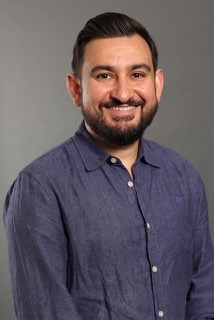
Seb Walsh is a public health researcher and doctor. He is passionate about doing public health research into dementia and healthy ageing research, and using this research to influence policy and public health practice.
His research includes different methods and disciplines, including working directly with policymakers and caregivers.
He qualified from Keele Medical School in 2015. Following completion of clinical foundation training, he completed public health specialty training in the East of England between 2018 and 2026.
Seb completed a Master’s in Public Health at the University of Cambridge in 2018-19 with distinction. He was then awarded prestigious NIHR fellowships – Academic Clinical Fellowship (2019-2022); NIHR Doctoral (PhD) Fellowship (2022-2025) – both at Cambridge, before an NIHR Postdoctoral Award (2026-2031), which is being completed at Queen Mary University London.
Dr Walsh has published over 40 research studies, including in the world’s leading medical journals. He established, and co-leads, the international Population-Level Approaches to Dementia Risk Reduction (PLADRR) research group. He also set up and co-chairs the Academic Special Interest Group and the Healthy Ageing Special Interest Group for the UK Faculty of Public Health.
In 2024, he was awarded the Rising Star Award in the Alzheimer’s Society Research and Care Excellence Awards.
Links
Summary infographic: https://www.cph.cam.ac.uk/sites/default/files/dementia_prevention_summary.pdf
Full thesis: https://doi.org/10.17863/CAM.123819
All published studies from this thesis available here: https://orcid.org/0000-0001-8894-5006
 Share
Share
 Tweet
Tweet