
Inclusive doesn’t mean identical
Accessibility isn't always straightforward and that's okay
When organisations begin their neuroinclusion journey, the conversation often starts with a simple question:
“What adjustments do neurodivergent employees need?”
It’s an important question, but it can sometimes create the impression that workplace accessibility is simply a matter of identifying a need and implementing a solution.
In reality, inclusion is rarely that straightforward.
As workplaces become more aware of neurodiversity, many managers and HR professionals find themselves navigating situations where different people’s access needs don’t neatly align. In some cases, they may even appear to conflict.
This can feel uncomfortable. Organisations are often reluctant to discuss competing accessibility needs because they fear it might undermine inclusion efforts.
In reality, the opposite is true.
Recognising the complexity of accessibility is essential to creating genuinely inclusive workplaces.
Different people need different things

Neurodivergent people are not a homogeneous group.
Even people with the same diagnosis can have very different preferences, strengths, challenges, and support requirements.
Consider the following examples:
- One employee needs a quiet environment to concentrate, while another thinks best through discussion and verbal collaboration.
- One colleague prefers cameras off during virtual meetings to reduce cognitive load, while another relies on facial expressions and visual cues to process information.
- One person benefits from highly detailed written instructions, while another finds excessive detail overwhelming and prefers concise guidance.
- One employee values direct, unambiguous communication, while another experiences the same communication style as abrupt or confrontational.
- One person thrives with flexibility and autonomy, while another depends on structure, routine and predictability.
None of these needs is unreasonable.
None is more valid than the others.
Yet organisations can sometimes feel pressure to find a single solution that works for everyone.
The challenge is that such a solution rarely exists.
Moving beyond one-size-fits-all inclusion
Traditional workplace systems are often designed around consistency.
Policies, processes and ways of working are frequently developed to treat everyone the same.
While consistency can be valuable, inclusion often requires something different.
It requires recognising that fairness and sameness are not necessarily the same thing.
Providing identical experiences to every employee does not automatically create equitable outcomes.
Instead, organisations need to develop cultures where different needs can be openly discussed, understood and accommodated wherever possible.
This means moving away from asking:
“What is the correct adjustment?”
and towards asking:
“How can we create conditions where different people can work effectively together?”
The role of managers

This is where many managers find themselves facing difficult decisions.
A manager may receive two entirely reasonable requests that pull in different directions.
Should meetings be highly structured or conversational?
Should communication happen primarily in writing or verbally?
Should collaboration be encouraged or minimised to reduce distraction?
Often, the answer is not choosing one person’s needs over another’s.
Instead, it involves finding flexible approaches that allow multiple needs to coexist.
This might mean:
- Providing meeting agendas in advance while still allowing discussion.
- Offering both written and verbal instructions.
- Creating quiet spaces alongside collaborative working areas.
- Agreeing on team communication norms that accommodate different preferences.
- Being transparent about why certain decisions are made.
The goal is not perfection.
The goal is to create an environment where people can discuss what helps them work effectively.
Psychological safety matters
The most important ingredient is psychological safety.
When employees feel safe to talk about their needs without judgment, organisations are better able to identify practical solutions before problems escalate.
Equally, psychological safety allows people to recognise that their needs exist alongside the needs of others.
Inclusion is not a competition between different forms of accessibility.
It is an ongoing process of understanding, communication and adaptation.
The social model of disability and workplace inclusion
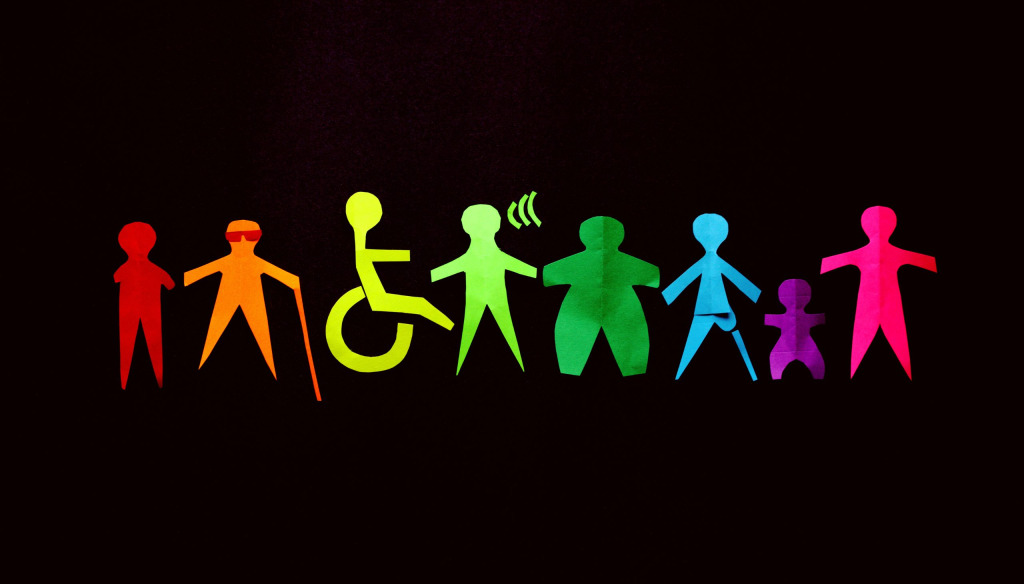
The social model of disability reminds us that people are often disabled not by their condition itself, but by barriers within society and the environments around them.
In workplace settings, those barriers can include inflexible policies, rigid communication expectations, inaccessible processes and assumptions about how people should work.
However, the social model does not suggest that every barrier can be eliminated entirely or that every need will align perfectly with every other need.
Rather, it encourages organisations to focus on identifying barriers, understanding their impact and making reasonable changes wherever possible.
This requires dialogue, flexibility and a willingness to recognise complexity rather than avoiding it.
Inclusion is a balancing act, not a perfect solution
The most neuroinclusive organisations understand that accessibility is rarely about finding one perfect answer.
It is about creating workplaces where different needs can be discussed openly, where adjustments are approached thoughtfully and where managers feel confident navigating complexity.
Ultimately, inclusion doesn’t mean everyone works in the same way.
It means creating environments where different ways of working are recognised, respected and supported.
That isn’t always simple.
But it is what meaningful inclusion looks like.
 Share
Share
 Tweet
Tweet