

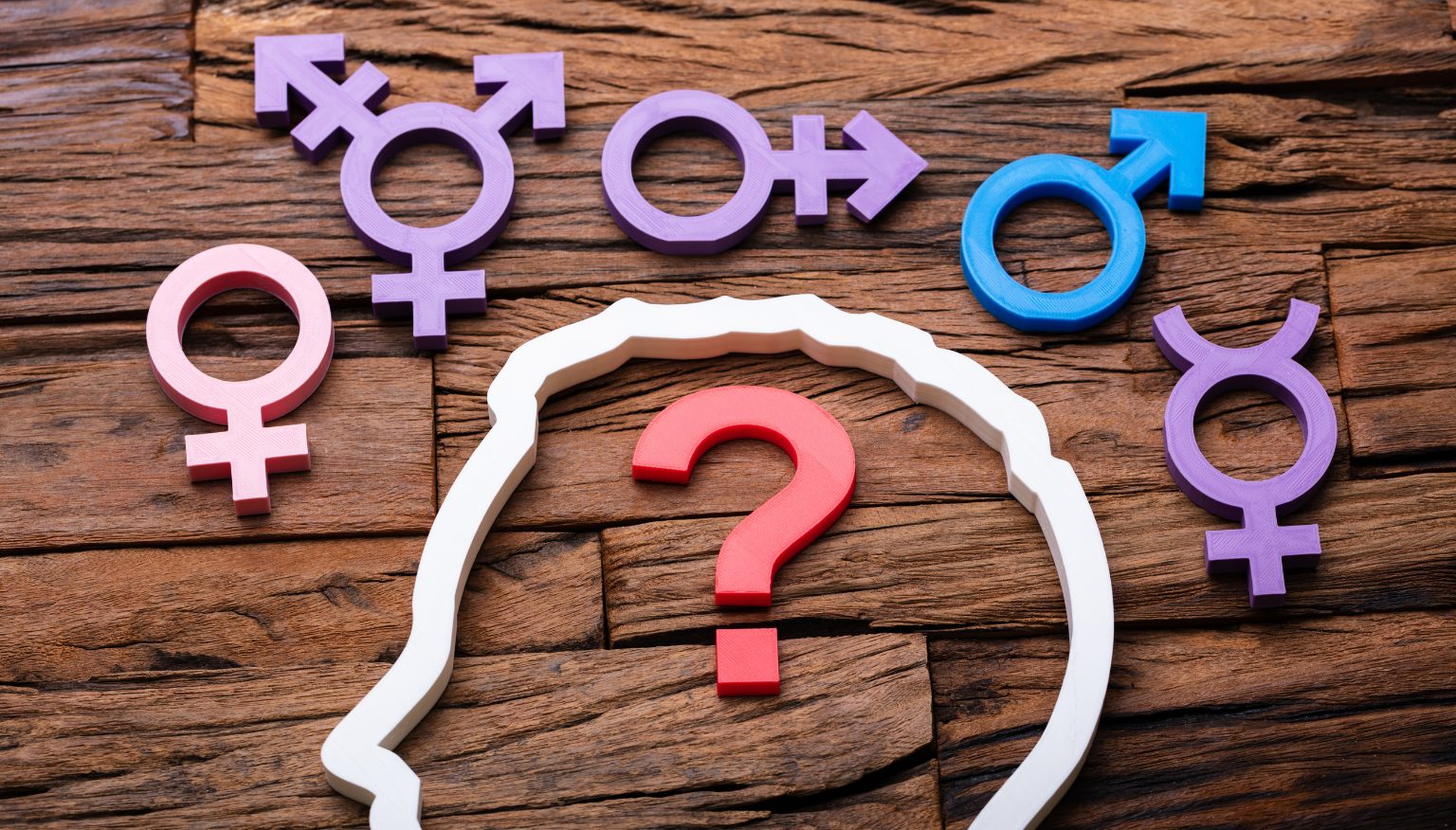
10 gendered brain neuromyths we’re ready to retire
How outdated stereotypes continue to shape false beliefs and why it’s time to move on
At The Brain Charity, we work to improve understanding of neurological conditions and challenge the myths that create barriers for people with brain differences. Some of the most widespread — and damaging — misconceptions are about gender and the brain.
From education and healthcare to employment and everyday life, assumptions about what men’s and women’s brains can or can’t do continue to shape decisions, diagnoses, and opportunities. These ideas aren’t just outdated — they’re inaccurate. And they affect real people.
In this blog, we’re addressing 10 persistent gendered brain neuromyths — false beliefs about how male and female brains supposedly differ — and setting the record straight with what science tells us.
Myth 1: Women are naturally better at multitasking
This popular myth suggests that women’s brains are “wired” to handle multiple tasks simultaneously. But in reality, multitasking is difficult for everyone — not because of gender but because the brain is generally most effective when focusing on one complex task at a time.
Studies show no consistent biological difference in multitasking ability between men and women. Where minor differences appear, they’re likely to reflect lived experience and social roles, not innate brain structure.
Myth 2: Men are better at focusing on a single task
Another oversimplification is the idea that men are “single-taskers” while women are “multi-taskers.” Attention and focus vary more from person to person than from gender to gender. While individuals may excel in different cognitive styles, this isn’t determined by sex.
Focus is shaped by many factors, not just biology, including environment, stress levels, neurodivergence, and task relevance.
Myth 3: Men are naturally better at maths and spatial reasoning

This long-standing myth has been used to explain the underrepresentation of women in science, technology, engineering and maths (STEM) fields. However, research consistently shows no innate male maths or spatial skills advantage.
Any gaps that do appear are strongly linked to social and educational influences — such as how children are taught, who is encouraged to take risks, and how confidence is built. When given equal support and opportunity, girls perform just as well as boys in STEM subjects.
Myth 4: Women are more emotionally intelligent
While women are often socialised to express and interpret emotion from a young age, emotional intelligence is not biologically female.
Empathy, self-awareness, and emotional regulation are skills that can be developed by people of any gender. The perception that women are naturally more emotionally intelligent reflects cultural expectations more than scientific fact and can place unfair emotional labour on women while discouraging emotional growth in men.
Myth 5: Women are more emotional because they use the ‘emotional part’ of the brain more
There is no “emotional brain” that women access more than men. Emotions are processed through brain regions such as the amygdala and prefrontal cortex — areas that all humans share.
Men and women experience emotions equally, though they may be encouraged to express or suppress them differently. This myth distorts neuroscience and reinforces the idea that emotion is incompatible with reason, which is both inaccurate and harmful.
Myth 6: Men are wired for systemising, women for empathising
This theory — that men are naturally drawn to systems and logic, while women are innately more nurturing and people-focused — has been widely challenged.
While individuals certainly have preferences and strengths, research has not shown this divide to be biologically fixed. People of all genders can be both analytical and empathetic. Framing these abilities as opposites rooted in brain sex reinforces traditional gender roles rather than reflecting how diverse minds actually work.
Myth 7: There are male brains and female brains
Despite the popularity of this idea, neuroscience has shown that brains do not divide neatly into male and female categories.
Most human brains are a mosaic of features that may be statistically more common in one sex or the other, but rarely all at once. There is significant overlap between the sexes in structure and function, and far more variation within genders than between them.
Myth 8: Hormones explain all gender differences in behaviour

While hormones like testosterone and oestrogen influence brain development and function, they are only one part of a much more complex picture.
Hormonal differences cannot fully account for behaviour, cognition, or emotional expression patterns. Social environment, education, trauma, neurodivergence, and culture all play significant roles — and should not be overlooked.
Myth 9: Men are more rational, women are more intuitive
This myth dates back centuries and has been used to justify gender inequality in science, politics, and leadership.
There is no scientific evidence that rationality belongs more to one gender than another. Intuition and logical reasoning involve complex brain processes and are used by everyone. Labelling men as more rational and women as more intuitive reinforces deeply ingrained biases — not neuroscience.
Myth 10: Male and female brains are fundamentally different
This broad claim is still common in media and public discourse, but current neuroscience does not support it.
While some average structural differences exist, they are small, inconsistent, and don’t predict individual abilities or behaviours. The brain is highly plastic, meaning it changes and adapts with experience. Who we are and how we think are shaped far more by environment, learning, and individual neurodiversity than by sex.
Why these myths matter
Gendered brain neuromyths may seem minor, but they can have real consequences.
They can:
- Affect how people are taught or treated in school
- Influence diagnosis and treatment in healthcare
- Limit career opportunities
- Reinforce stigma around emotional expression and intelligence
- Mask the true diversity of human brains
At The Brain Charity, we are committed to promoting an accurate, inclusive, and evidence-based understanding of the brain and challenging the myths that prevent equal access to support and opportunity.
Want to learn more?
We offer neurodiversity training, educational workshops, and resources tailored for workplaces, schools and community groups.
Contact us:training@thebraincharity.org.uk
 Share
Share
 Tweet
Tweet