

Who supports the manager? Neurodiversity and leadership in the workplace
Why neurodivergent leaders need support too — and what organisations are missing
When organisations talk about neurodiversity at work, the conversation is usually centred on employees.
How do we support neurodivergent staff?
What adjustments might they need?
How can managers better understand neurodiversity?
These are important questions. But they often overlook another reality:
Many managers, leaders and senior decision-makers are neurodivergent too.
From ADHD and autism to dyslexia, dyspraxia and Tourette syndrome, neurodivergent people can be found at every level of an organisation. Yet discussions about workplace neurodiversity rarely explore what happens when the person responsible for supporting others also has support needs of their own.
It’s a gap in the conversation that organisations can no longer afford to ignore.
The hidden expectations placed on managers

Management is often viewed as the next natural step in a successful career.
An employee demonstrates expertise, delivers strong results and is promoted into a leadership role.
But being good at a role and being responsible for people are not necessarily the same thing.
Managers are expected to:
- Lead teams
- Manage competing priorities
- Conduct difficult conversations
- Navigate workplace politics
- Deliver performance reviews
- Support employee wellbeing
- Handle conflict
- Communicate effectively with a wide range of people
For neurodivergent managers, some of these expectations may require significant additional effort.
This doesn’t mean neurodivergent people cannot be exceptional leaders.
In fact, many bring valuable strengths to management, including creativity, innovation, problem-solving, empathy, attention to detail and the ability to think differently.
However, leadership roles often come with workplace structures and expectations that were not designed with neurodiversity in mind.
When support becomes more complex
One challenge that receives little attention is the complexity that can arise when both manager and employee are neurodivergent.
Consider the following scenarios:
- An ADHD manager supporting an employee with ADHD.
- An autistic manager leading a highly social and relationship-driven team.
- A dyslexic manager responsible for producing extensive written reports.
- A neurodivergent manager is expected to coach employees using communication styles that feel unnatural or exhausting.
These situations are increasingly common as more organisations recognise and support neurodiversity in the workplace.
The assumption is often that a neurodivergent manager will automatically understand how to support neurodivergent employees.
The reality is usually more nuanced.
Two people with the same diagnosis can have entirely different experiences, strengths, challenges and support needs.
Shared neurodivergence does not automatically create shared understanding.
The executive functioning challenge
Management roles often place significant demands on executive functioning.
Executive functioning refers to the cognitive processes that help us organise, prioritise, plan, regulate attention and manage multiple tasks.
For many neurodivergent people, particularly those with ADHD, executive functioning can require considerable effort.
A manager may be responsible for:
- Tracking multiple projects
- Scheduling meetings
- Following up on actions
- Managing deadlines
- Responding to emails
- Supporting team members
- Reporting to senior leadership
The workload can quickly become overwhelming.
This isn’t a question of capability. It is often a question of whether the systems around the individual support them to succeed.
Too often, organisations focus on whether a manager is coping rather than asking whether workplace processes themselves could be improved.
Burnout doesn’t disappear when you become a manager

In some cases, management can increase the risk of burnout.
Many neurodivergent professionals thrive when working within areas of expertise or special interest. Leadership roles often shift the focus away from technical work and towards people management, administration and organisational responsibilities.
The demands of constantly switching between tasks, managing interpersonal relationships and responding to competing pressures can be exhausting.
Some managers may feel they need to hide their own struggles because leadership positions are often associated with confidence, resilience and having the answers.
As a result, support needs can go unnoticed.
The question of disclosure
Disclosure can become even more complicated when someone moves into a leadership role.
An employee may feel comfortable sharing their neurodivergence with their manager.
But what happens when the manager is the person considering disclosure?
Some leaders worry that disclosing a diagnosis may affect how colleagues perceive their competence or authority.
Others fear being judged, stereotyped or overlooked for future opportunities.
This can create a situation where the people responsible for fostering inclusive cultures do not feel safe enough to be open about their own experiences.
What organisations can do differently?
Creating neuroinclusive workplaces should not stop at supporting employees.
Organisations should also consider how they support neurodivergent managers and leaders.
This might include:
- Providing neurodiversity training for leaders and managers
- Creating opportunities for peer support and networking
- Offering coaching and mentoring
- Reviewing management processes through an accessibility lens
- Encouraging open conversations about different working styles
- Ensuring adjustments are available at every level of the organisation
Importantly, support should not be viewed as a response to poor performance.
It should be recognised as a way of helping people perform at their best.
Moving the conversation forward
The conversation around workplace neurodiversity has come a long way in recent years.
More organisations are recognising the value of neurodivergent talent and taking steps to create more inclusive environments.
The next step is to ensure that inclusion extends beyond employees and reaches every level of the organisation.
Because managers are not simply providers of support.
They are people too.
And like any employee, they may need understanding, flexibility and support to thrive.
When organisations recognise this reality, they move closer to creating workplaces that work for everyone.
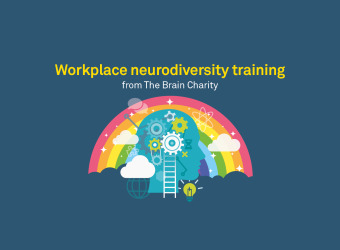
Workplace neurodiversity training from The Brain Charity
If your organisation wants to create a workplace where neurodivergent employees and managers can thrive, The Brain Charity’s workplace neurodiversity training can help.Our expert-led sessions move beyond awareness to provide practical guidance on creating inclusive recruitment, management and retention practices, understanding reasonable adjustments, and reducing barriers that can prevent talented people from succeeding.
Because building a neuroinclusive workplace isn’t just about supporting employees – it’s about ensuring leaders and managers have the knowledge, confidence and support they need to help everyone perform at their best.
 Share
Share
 Tweet
Tweet
Related information