
The senses
Visual processing differences
Visual sensitivity is very common in neurodivergent children.
Some children experience difficulty with:
- bright lights
- fluorescent lighting
- cluttered visual environments
- fast moving visual information
Busy classrooms, supermarkets or screens can become overwhelming.
Signs of visual sensory overload
Children may:
- squint or cover their eyes
- avoid eye contact
- struggle to focus on written work
- become tired or irritable quickly
Irlen syndrome
Some children experience visual stress, sometimes referred to as Irlen syndrome.
This can cause:
- words appearing to move or blur
- headaches while reading
- difficulty tracking text
- fatigue when reading
Some children benefit from:
- coloured overlays
- tinted lenses
- softer lighting
- larger text spacing
Helpful strategies for parents
- Reduce visual clutter where possible
- Provide calm spaces for homework
- Use visual schedules and simple layouts
- Allow breaks from screens and reading
Auditory processing differences
Sound can be particularly challenging for some children.
Two common difficulties include:
Sound sensitivity
Certain sounds may feel painful or overwhelming, such as:
- hand dryers
- alarms
- shouting
- busy classrooms or playgrounds
Difficulty separating sounds
Some children struggle to distinguish foreground sounds from background noise.
For example, they may struggle to hear a teacher’s voice in a noisy classroom.
This can affect:
- listening
- following instructions
- concentration
Signs of auditory overload
Children may:
- cover their ears
- withdraw from noisy spaces
- become distressed in busy environments
- appear not to listen
Helpful strategies
- reduce background noise when possible
- use clear, short instructions
- provide written or visual information
- allow quiet recovery spaces
Noise-reducing headphones can also be helpful in some situations.
Tactile processing (touch)
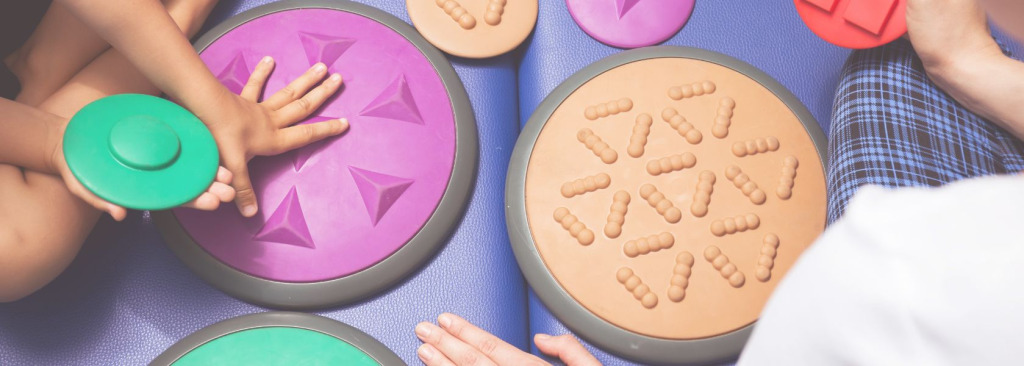
The tactile system processes information through the skin.
Some children may be very sensitive to touch, while others may seek it out.
Tactile sensitivity
Children may dislike:
- certain clothing fabrics
- labels or seams
- messy play
- unexpected touch
Hair brushing, nail cutting or washing can sometimes be distressing.
Tactile seeking
Some children seek touch to regulate their nervous system.
They may:
- enjoy squeezing, hugging or deep pressure
- touch surfaces and textures
- enjoy sensory materials such as sand, clay or water
Helpful strategies
- allow gradual exposure to new textures
- respect clothing preferences
- introduce messy play slowly
- provide options like tools, gloves or brushes for touching materials
Taste and smell sensitivities
Taste and smell are closely connected sensory systems.
Some neurodivergent children experience very strong reactions to flavours, smells or food textures.
Signs of sensory-based food avoidance
Children may:
- eat a very limited range of foods
- prefer foods with specific textures
- react strongly to smells
- gag or refuse certain foods
ARFID
Some children experience Avoidant Restrictive Food Intake Disorder (ARFID).
Unlike other eating disorders, ARFID is not driven by body image concerns.
It is often linked to:
- sensory sensitivity
- anxiety
- fear of choking or vomiting
Support may involve occupational therapists, dietitians and psychologists.
Helpful strategies
- avoid forcing foods
- introduce small sensory changes gradually
- offer safe and familiar foods alongside new options
- reduce pressure during meals
Proprioception – body awareness
The proprioceptive system tells us where our body is in space.
It relies on information from muscles and joints.
Proprioception helps us:
- control movement
- judge force and pressure
- coordinate actions
Signs of proprioceptive differences
Children may:
- bump into objects
- use too much or too little force
- seek deep pressure
- enjoy jumping, crashing or climbing
Why sensory seeking helps regulation
Activities that provide deep pressure or muscle resistance can help regulate the nervous system.
Examples include:
- carrying heavy objects
- pushing or pulling activities
- squeezing putty or clay
- jumping on trampolines
These activities can improve focus, calmness and body awareness.
Vestibular system – balance and movement
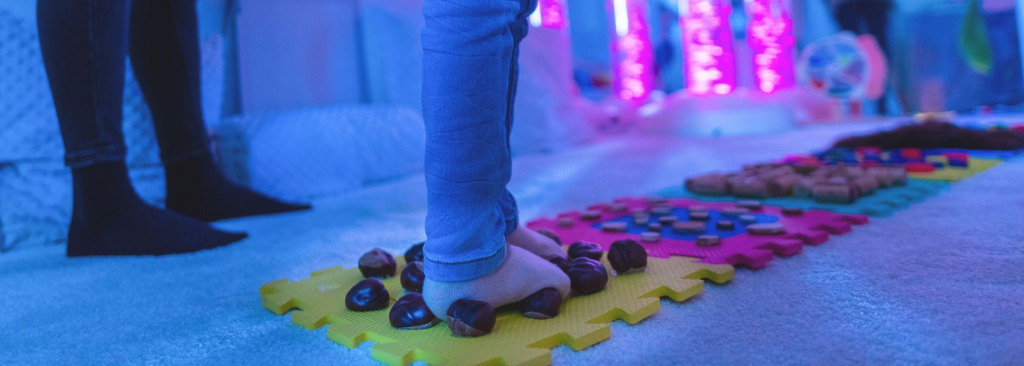
The vestibular system, located in the inner ear, helps control:
- balance
- posture
- coordination
- spatial awareness
It also plays an important role in attention and emotional regulation.
Vestibular sensitivity
Some children may feel dizzy or unsafe with movement.
They may avoid:
- swings
- climbing
- spinning
- fast movement
Vestibular seeking
Other children crave movement and may:
- spin frequently
- jump or bounce
- rock back and forth
- struggle to sit still
Movement helps some children regulate their nervous system and focus.
Sensory circuits
Some schools use sensory circuits, which are short movement routines designed to regulate the nervous system.
These typically include:
- alerting activities (jumping, bouncing)
- organising activities (balance, coordination)
- calming activities (deep pressure, stretching)
Research suggests these activities can help improve attention, regulation and readiness to learn.
Interoception – understanding body signals
Interoception refers to the ability to sense internal body signals such as:
- hunger
- thirst
- temperature
- pain
- needing the toilet
- emotional signals
Some neurodivergent children have difficulty recognising these signals.
This can affect:
- emotional regulation
- self-care
- recognising anxiety or stress
Parents can support children by helping children label body sensations and emotions, and establishing routines so that children begin to associate certain internal sensations (such as hunger or needing the toilet) with the appropriate response.