Finding your voice after a stroke
Understanding communication difficulties and recovery
Many people associate stroke with physical symptoms like weakness or difficulty walking. However, a major challenge for stroke survivors is often communication.
Approximately two-thirds experience communication difficulties right after a stroke, with about one in three facing long-term challenges. A stroke can affect speaking, language comprehension, reading, writing, memory, and attention, making everyday conversations exhausting or frustrating.
Why can a stroke affect communication?
A stroke occurs when the brain’s blood supply is interrupted, or bleeding happens within the brain, affecting different communication skills based on the stroke’s location and severity.
People may struggle to find words, speak, or read and write. These difficulties do not indicate a person’s intelligence, as many understand more than they can express. Communication can vary daily, with factors such as fatigue, stress, or noisy environments affecting abilities.
Different types of communication difficulties after stroke
Aphasia
Aphasia is a language disorder caused by damage to the language centres of the brain.
It can affect a person’s ability to:
- Speak
- Understand spoken language
- Read
- Write
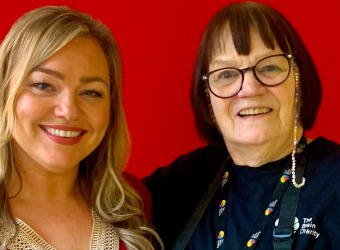
Some people struggle to find the right words. Others know exactly what they want to say but cannot express it as they intend. Pamela experienced expressive aphasia after her stroke at 44.
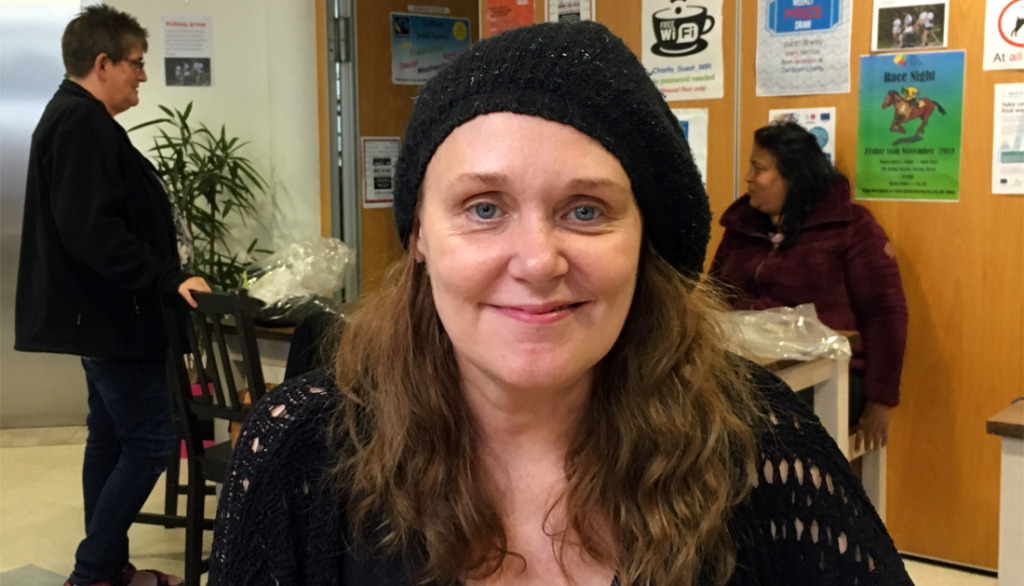
She remembers the profound impact it had on her life:
“I literally felt voiceless.”
As her recovery progressed, she found communication became easier on some days than others.
“Some days I’ll talk better, some days the words are more difficult.”
For Rose, who also developed aphasia after her stroke, losing the ability to communicate affected every aspect of daily life.
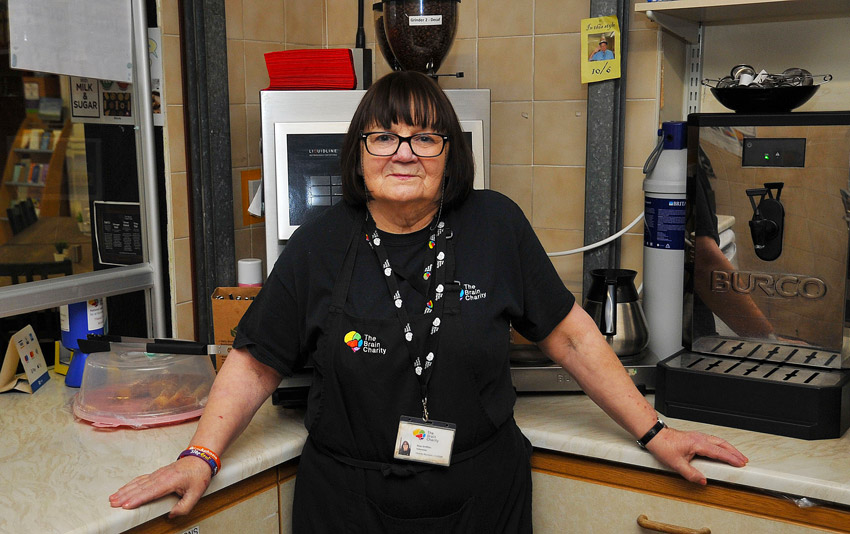
“Trying to speak and not being able to is such a horrible feeling.”
Dysarthria
Dysarthria is different from aphasia. Rather than affecting language itself, it affects the muscles used for speech.
People with dysarthria may experience:
- Slurred speech
- Slow speech
- A weak or strained voice
- Difficulty controlling volume
- Changes to speech rhythm
They know exactly what they want to say, but weakness or poor coordination of the speech muscles makes it difficult to produce words.
Apraxia of speech
Apraxia of speech affects the brain’s ability to plan and coordinate the movements needed for speech.
Someone with apraxia may:
- Struggle to say words consistently
- Substitute, repeat or miss sounds
- Find longer words particularly difficult
- Be able to say familiar phrases more easily than new ones
Apraxia often occurs alongside aphasia, but they are different conditions requiring different therapeutic approaches.
Cognitive communication difficulties
Communication relies on much more than language. After a stroke, changes in thinking skills can affect conversations, even when speech itself appears relatively clear.
These cognitive communication difficulties can involve:
- Attention
- Working memory
- Planning and organisation
- Emotional regulation
- Self-monitoring
- Problem solving
- Impulse control
Someone may lose track of conversations, struggle to stay on topic, misunderstand humour or metaphors, forget information just shared, or find it difficult to follow multi-step instructions.
Because these difficulties are often invisible, they can easily be misunderstood by others.
Communication is more than speech.
Many people believe communication difficulties only involve the inability to speak. In reality, communication encompasses speaking, understanding, reading, writing, and nonverbal cues such as gestures and facial expressions.
Brain injuries can impact reading and writing abilities. For example, acquired alexia (or acquired dyslexia) can make reading difficult even for someone who previously read fluently. Others may face apraxia, affecting speech movement planning.
These acquired neurological conditions are distinct from developmental issues such as dyslexia or developmental dyspraxia, which begin in childhood. Recognising these differences ensures individuals receive suitable assessment and support.
The emotional impact of communication difficulties
Communication problems affect far more than conversation.
They can change relationships, confidence, employment, hobbies and independence.
Many stroke survivors describe becoming isolated because they worry about being misunderstood or because conversations require so much concentration.
Pamela explained:
“I worried what people would think of me, so I avoided putting myself in unfamiliar situations with people I don’t know.”
Helen experienced speech difficulties after her stroke. Through specialist counselling at The Brain Charity, she realised her emotional struggles weren’t simply depression.
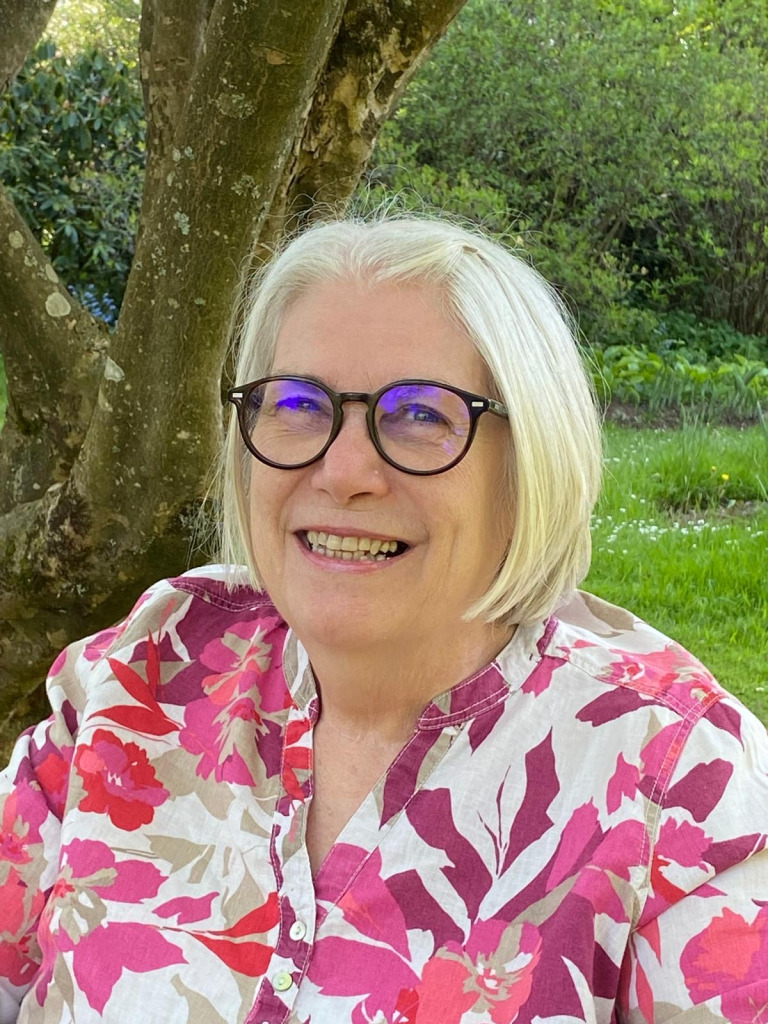
“I wasn’t depressed, I was grieving for who I was before the stroke.”
That grief is something many stroke survivors recognise. Communication changes can feel like losing part of your identity.
Dominick experienced this after his stroke caused by an arteriovenous malformation (AVM). When his speech returned, his voice sounded completely different.
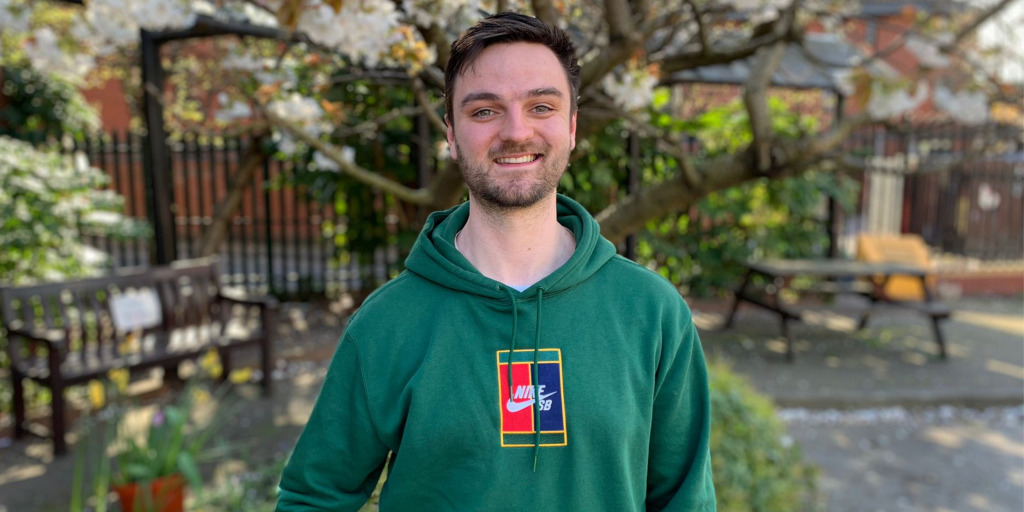
“It feels so weird when one day you just wake up with a different voice. I felt like I had lost part of my identity.”
Recovery is possible
Every recovery is unique, just as every stroke is.
Many communication difficulties can improve over time due to neuroplasticity, the brain’s ability to create new pathways after injury.
Speech and language therapy is vital in this process. Therapists help individuals enhance communication, develop everyday strategies, and guide families in adapting their communication styles. Therapy may involve strengthening speech, improving word-finding, and introducing alternative communication methods.
Recovery continues beyond formal therapy; ongoing practice through conversations, reading, and communication groups is essential for maintaining and building progress.
Research has also shown encouraging improvements in reading following stroke through structured rehabilitation, with digital programmes such as iReadMore and Read-Right helping some people improve reading speed and accuracy.
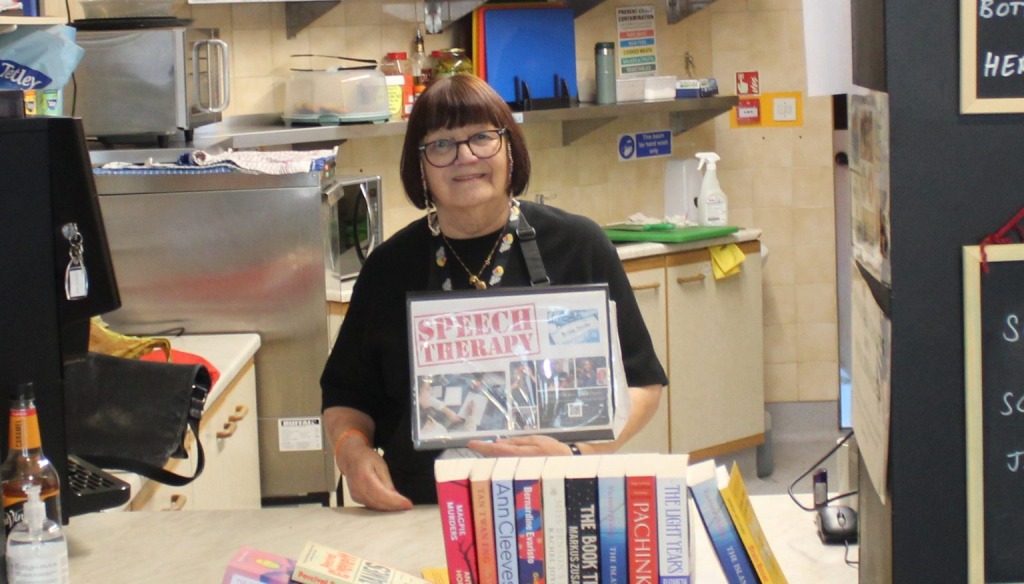
Join our Aphasia talking table hosted by Rose
Aphasia is a complex language and communication disorder that can occur after a stroke due to damage in language centres of the brain. This can mean that speaking can take some time.Learning to talk again with a small, supportive, group over a cuppa can be really beneficial, whatever the cause of the aphasia.
Whether you’re living with aphasia or caring for someone who is, everyone is welcome!
Come along and be part of a supportive community where you can learn from others, gain valuable tips and resources, and most importantly, find encouragement and understanding.
Sometimes singing succeeds where speaking cannot.
One of the most remarkable aspects of stroke recovery is that music and language are processed differently within the brain.
Dominick discovered this while recovering in hospital.
“Two weeks after surgery, I couldn’t talk at all, but I could sing ‘Fly Me To The Moon’.”
For Rose, singing became an important part of rebuilding her communication.
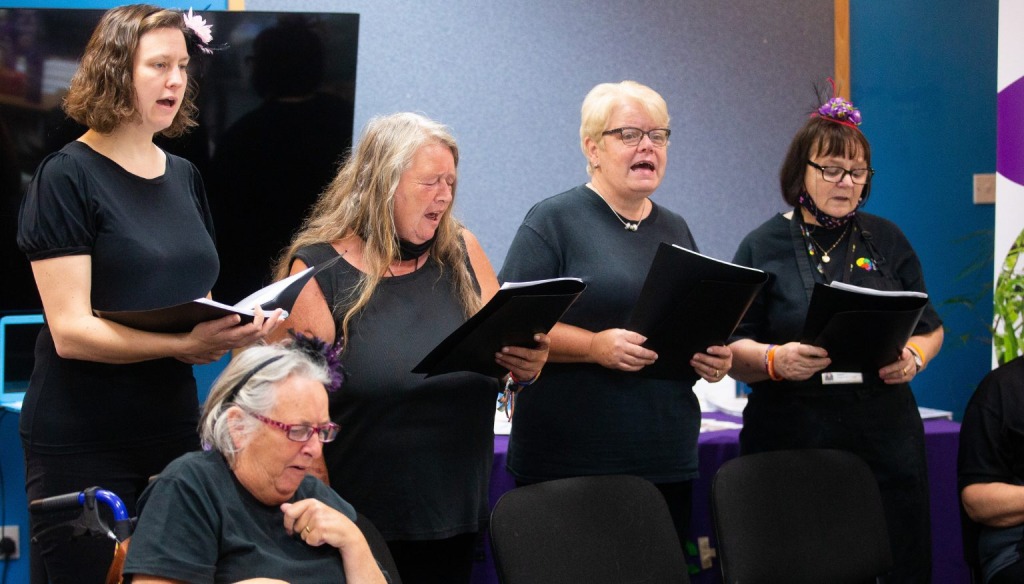
After joining The Brain Charity’s choir, she gradually found both her confidence and her speech improving.
She describes the moment simply:
“My voice is heard now.”
Her experience demonstrates that recovery isn’t always about returning to exactly how things were before. Sometimes it’s about discovering new ways to reconnect with the world.
How family and friends can help
The way other people communicate can make an enormous difference.
Simple adjustments can help conversations become less stressful and more successful.
These include:
- Speaking clearly and one topic at a time
- Giving the person plenty of time to respond
- Reducing background distractions
- Maintaining eye contact
- Avoid finishing sentences for them
- Checking understanding rather than making assumptions
- Encouraging gestures, drawing or writing if helpful
- Remaining calm and patient
Dominick summed up what many stroke survivors want from those around them:
“I just wanted to be treated the way I was before.”
Technology and communication aids
Technology has transformed communication for many stroke survivors.
Speech and language therapists may recommend:
- Communication books
- Letter charts
- Picture dictionaries
- Speech apps
- Smartphones and tablets
- Video calling
- Computer-based therapy programmes
Pamela now uses a speech assistance app to support her day-to-day communication, helping her maintain independence and confidence.
Technology is not a replacement for conversation, but it can provide valuable support while communication continues to improve.
Finding your voice again
Communication after a stroke is rarely a straightforward journey.
There can be setbacks, frustrating days and moments when words refuse to come. But there can also be progress, new strategies, growing confidence and unexpected discoveries.
Every person’s recovery looks different.
 Share
Share
 Tweet
Tweet