Wilson’s disease

Hepatolenticular degeneration, copper storage disorder

What is Wilson’s disease?

Wilson’s disease is a rare genetic condition where the body can’t clear the copper it doesn’t need. Copper is a mineral we all need in small amounts, but in Wilson’s disease it can build up in organs such as the liver, brain and eyes, affecting how they work over time.

Symptoms can appear at any age, but most people are diagnosed in childhood or early adulthood. Because Wilson’s disease affects each person differently, symptoms can sometimes be difficult to recognise at first.

Although Wilson’s disease is lifelong, it is treatable, and many people live well with the condition. Early diagnosis makes a big difference, as treatment can prevent copper from building up further, protecting long-term health.

What causes Wilson’s disease?

Wilson’s disease is caused by changes to a gene called ATP7B. This gene helps the body move copper out of the liver so it can be safely removed. When this gene doesn’t work as it should, copper builds up in organs such as the liver, brain and eyes.

Wilson’s disease is inherited in an autosomal recessive pattern, which means the genetic changes are present from birth. A person develops the condition when they inherit two copies of the altered gene. Family members may carry the gene without showing any symptoms themselves.

What are the symptoms of Wilson’s disease?

The symptoms of Wilson’s disease can vary widely, depending where the copper builds up. They can include:

  • Changes in movement and coordination
    – such as tremors, stiffness, slower movements or problems with balance.
  • Emotional or behavioural changes
    – including low mood, anxiety, irritability or trouble concentrating.
  • Liver-related symptoms
    – tiredness, tummy swelling, jaundice (yellowing of the skin or eyes) or discomfort under the ribs.
  • Speaking or swallowing difficulties
    – caused by copper affecting the nerves and muscles involved in speech and eating.
  • Tremors or muscle spasms
    – which may become more noticeable over time.
  • Difficulty with fine motor skills
    – such as writing or fastening buttons.
  • Eye changes
    – including  “Kayser–Fleischer rings”, a harmless copper-coloured ring around the iris that doctors look for when diagnosing the condition.

Because Wilson’s disease affects each person differently, the early signs can be easily mistaken for other conditions.

A diagnosis usually involves blood tests, urine tests and sometimes an eye examination to check for signs of copper build-up.

Are you affected by Wilson's disease?

If you’re affected by Wilson’s disease The Brain Charity can support you.

We are the only charity in the UK to be here for every one of more than 600 different neurological conditions in existence. Individually, many are rare, but combined they affect 1 in 6 people.

We provide practical help on all aspects of living with Wilson’s disease, emotional support such as counselling, phone befriending and group therapy and social activities to people with Wilson’s disease from all over the UK from our centre in Liverpool.

Looking to talk to someone?

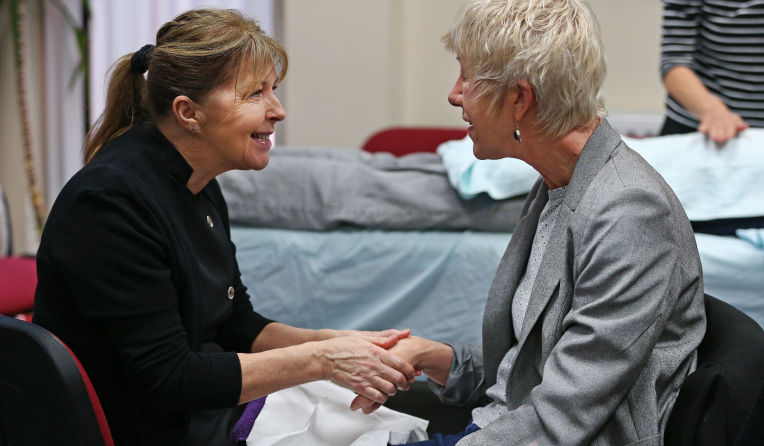
Woman smiling, making eye contact and holding the hand of another woman to comfort her

Phone us

Contact The Brain Charity now

Our friendly Information & Advice Officers are here to help.

0151 298 2999

Looking to talk to someone?

  • Please tell us which neurological condition you are affected by and what you need support with.

Caring for someone with Wilson's disease

We support carers, friends and family too

Are you a carer or relative of someone with Wilson’s disease? It’s just as important for you to look after your own physical and mental wellbeing too.

The Brain Charity provides free support for carers, friends and family of people with any form of neurological condition, including Wilson’s disease, from anywhere in the UK.

We also run additional carers advocacy service for all carers in Liverpool, regardless of which type of condition the person they care for has.

You don’t need to be a formal or registered carer

We can help you even if you don’t view yourself as a formal carer or claim Carer’s Allowance.
Find out some of the ways we support carers below.

Other resources

Support groups

Wilson's disease support group

A UK based group for those living with Wilson’s disease.

Lots of information about life with the condition, plus you can become a member and join their online support network Zoom meetings.

Wilson's disease support UK

A UK based Facebook group for peer support from those living with this condition.

Support groups at The Brain Charity

Are you interested in setting up a Wilson’s disease support group or do you already run one?

Email activities@thebraincharity.org.uk

Alternatively, you can check out our list of related support groups here.

Other charities

British Liver Trust

Website: www.britishlivertrust.org.uk

Phone: 0800 652 7330

Email: fill in British Liver Trust’s online contact form for help and advice about this condition.