

Not just epilepsy: Understanding seizures and how they affect you
A practical guide to the different types of seizures
Being diagnosed with seizures can feel confusing and overwhelming. There are many different types of seizures, and each can affect people in different ways — which can make it hard to know what to expect. This article offers a clear look at the diverse landscape of seizures so you can better understand what’s happening.
What are seizures?
Our brains work by creating millions of tiny electrical signals every day. These signals carry messages between brain cells, helping the body know what to do next. A seizure happens when this process is disrupted, causing a sudden burst of electrical activity in the brain; leading to changes in movement, behaviour and awareness.
Most people are familiar with epilepsy – the neurological condition that causes repeated seizures, but what’s less understood is that seizures can be a symptom of many other conditions too. If you’ve been told that seizures are a symptom of your condition, understanding the facts can help you be prepared and feel more confident.
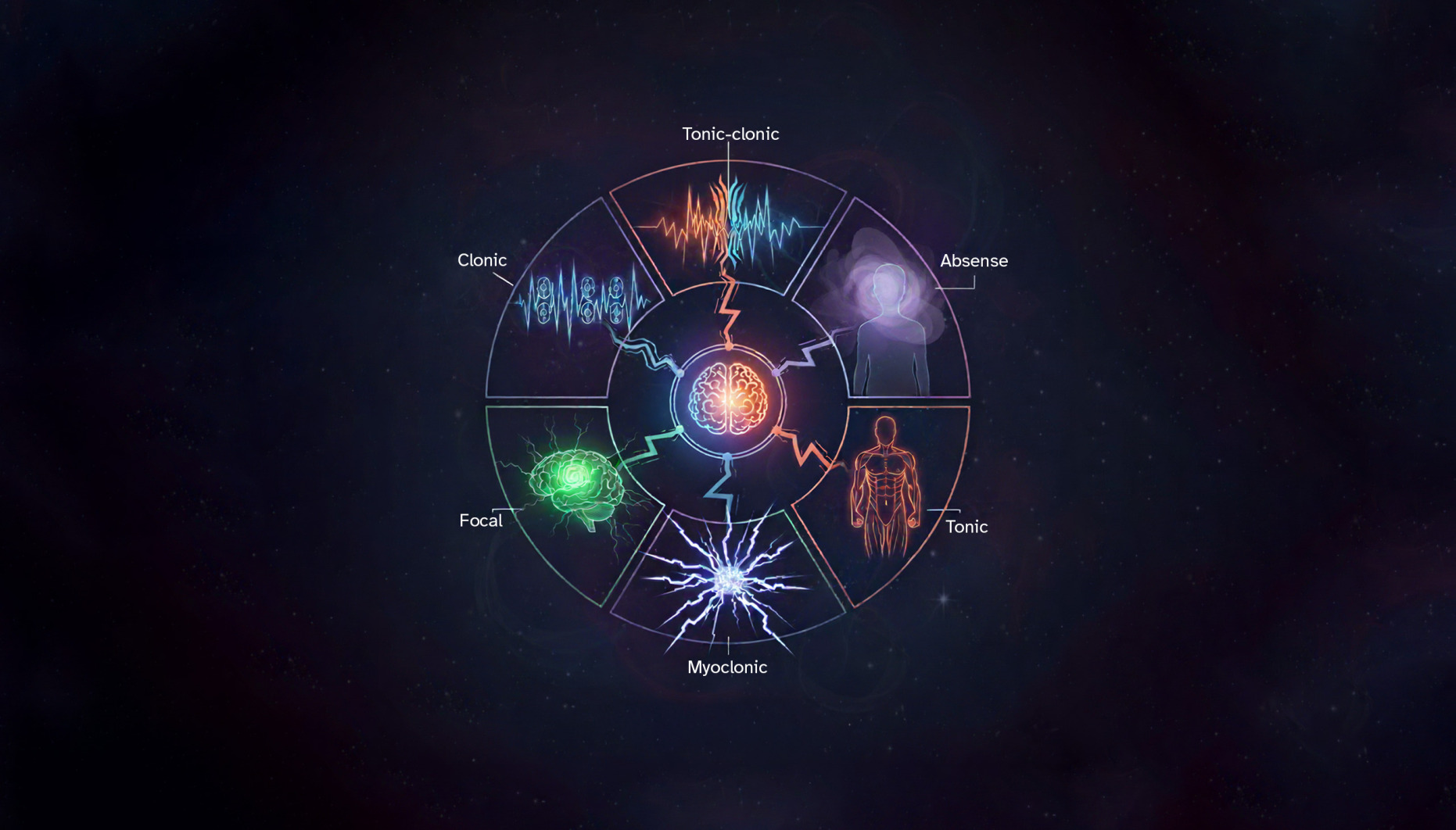
Seizures can look very different depending on their cause and how they affect the brain. To make sense of these differences, doctors group seizures into several types – each with its own signs and symptoms. Understanding these types of seizures can make it easier to recognise what’s happening and to get the right support.
Did you know?
- Functional neurological disorder (FND) affects an estimated 50,000 – 100,000 people in the UK. FND seizures are linked to the way the brain processes emotions and stress signals.
- Around 1 in 20 people who have a stroke will experience a seizure.
- Up to 2 in 3 people will have at least one seizure linked to a brain tumour.
- An estimated 1 in 10 people with a serious brain injury (TBI) will develop seizures.
What are the different types of seizures?

Focal seizures
These begin in one part of the brain, leading to symptoms in different parts of the body, depending on where the seizure starts.
- Focal aware seizures last for only a short time. The person will be aware of their surroundings and may experience an aura – such as an unusual taste or feeling. This can lead to muscle twitches, a change in sensation, or seeing things that aren’t there.
- Focal impaired awareness seizures affect a person’s awareness. They may be confused or not react in their usual way. Focal seizures are the most common type of seizure.
Generalised seizures
This type of seizure affects both sides of the brain. A person will usually be unaware and experience different types of muscle twitches, jerks and stiffness.
- Tonic-clonic seizures happen in two phases; first the body will go stiff, (tonic phase) and then jerk repeatedly, (clonic phase). A person will be unaware until the seizure stops.
- Absence seizures cause a brief loss of awareness, often referred to as ‘staring into space’. They can happen so quickly they can often be missed.
- Atonic seizures result in the body suddenly going limp. If a person is standing they may fall. These are also known as ‘drop attacks’.
- Myoclonic seizures are quick jerk-like movements of a muscle, or group of muscles. They may happen only once, or in clusters.
- Tonic seizures cause a sudden stiffness in the arms and legs. They don’t usually last long, but can cause falls if a person is standing.
- Clonic seizures look like repeated jerking movements. Sometimes a person will remain awake, while others may not. These can be over quickly, or form part of a longer tonic-clonic seizure.
Unknown-onset seizures
Seizures are placed into this group when doctors don’t yet know which part of the brain they began in. As more is discovered about seizures and testing becomes more reliable, these seizures may be described as either focal or generalised. This can help patients better understand and manage their condition.
What can trigger a seizure?
Knowing what to avoid can help prevent seizures happening. Not everyone will experience the same triggers, so it’s a really good idea to keep track of things that may bring a seizure on.
Common seizure triggers include:
- Not getting enough sleep
- Stress and worry
- Drinking alcohol or using drugs
- Certain food and drink
- Forgetting seizure medication
- Flashing lights
- In children, a high temperature
- Hormonal changes (particularly in women during their period).
How can I manage my seizures?

Speak up
Talking about your condition and seizure triggers is a really great way to help those around you keep you safe. Let them know what to do if a seizure happens and if there’s anything that you should avoid. Wearing a medical alert bracelet can really help too – especially if you’re out alone.
Look after your health
It’s important to keep up with medical appointments – testing and medication can help manage the number of seizures you have. Making a seizure diary can be helpful too – make a note of how they affect you, how they make you feel and when they tend to happen. This is useful information for those managing your care.
Lifestyle changes such as quitting smoking or following a seizure-friendly diet and avoiding trigger foods may also help reduce the impact your condition has. Make sure even the small changes are noted – it may be a tiny change that makes a big impact.
Find support
You don’t have to manage seizures alone. We understand that having a seizure – whatever the cause or stage in life, can have a big impact on school, work and mental health. Support is out there – ask your healthcare centre about local groups, connect with others online, or reach out to The Brain Charity for practical help and emotional support in living with a neurological condition.
Seizure FAQs: What you need to know
There are several types of seizures including generalised, focal and those with unknown onset.
The symptoms you experience will depend on the type of seizure.
Some seizures such as febrile seizures and infantile spasms have their own features and only happen in children.
No. While epilepsy is the most well-known condition linked to seizures, they can also be a symptom of other neurological or medical conditions such as multiple sclerosis, Lennox- Gastaut syndrome and cortical dysplasia.
Common seizure triggers include not getting enough sleep, stress, missed medication, alcohol, flashing lights, hunger and dehydration or illness.
Each person will experience different triggers, so keeping a seizure diary can help spot patterns.
Some people notice early warning signs such as changes in mood, confusion or unusual sensations known as auras.
Physical symptoms such as headaches and feeling sick, or numbness or tingling can happen too. Some people don’t get any warning at all.
If you or someone you care about experiences a seizure for the first time, it’s important to seek medical advice, even if the episode passes quickly.
A GP or specialist can help understand what happened, carry out tests if needed, and offer support or treatment options.
Seeing a doctor doesn’t always mean you’ll be diagnosed with epilepsy. Seizures can have many causes and further investigation can help provide clarity and peace of mind.
Epilepsy is the name for a condition which causes repeated seizures.
A seizure happens when electrical signals in the brain don’t work as they should.
Sometimes a person may only have one seizure, or they can happen more often, linked to conditions such as a brain tumour, stroke or infections such as meningitis.
It’s important to stay calm and focus on keeping the person safe.
For mild seizures, stay close and guide them away from danger.
For tonic-clonic seizures, move all objects away and place something soft under their head. Once the seizure ends, lay them on their side in the recovery position.
If the seizure lasts longer than 5 minutes, or if several seizures happen close together, call 999.
You don’t have to face seizures alone. Talk to your local healthcare team about local support groups and online communities.
The Brain Charity is always here to offer practical advice and emotional support for anyone affected by seizures. You can also find information at:
www.nhs.uk/conditions/epilepsy
 Share
Share
 Tweet
Tweet
Related information